In your wrist, there is a narrow passageway or bridge formed from bone and ligament. This protects the median nerve and nine tendons that travel from the forearm to the hand. The median nerve provides feeling and movement to your thumb and your fingers.

Carpal Tunnel Syndrome occurs when pressure from the narrow bridge compresses the median nerve. Common symptoms include
Numbness and tingling in your thumb and fingers
Pain or a mild shock that travels up your arm
Loss of strength in your hands
Pain is worse at night
Causes
Swelling or narrowing of the wrist space can result from repetitive hand motions, use of vibrating tools, and health conditions such as diabetes or rheumatoid arthritis. Some individuals are born with smaller carpal tunnels, which predispose them to this condition.
“Carpal Tunnel Syndrome is more common in women, particularly between the ages of 45 and 54, which coincides with the menopausal transition. Anatomical differences (such as smaller wrist bones) and hormonal fluctuations contribute to this increased risk. “ Manchester Hand Surgeons
Treatment
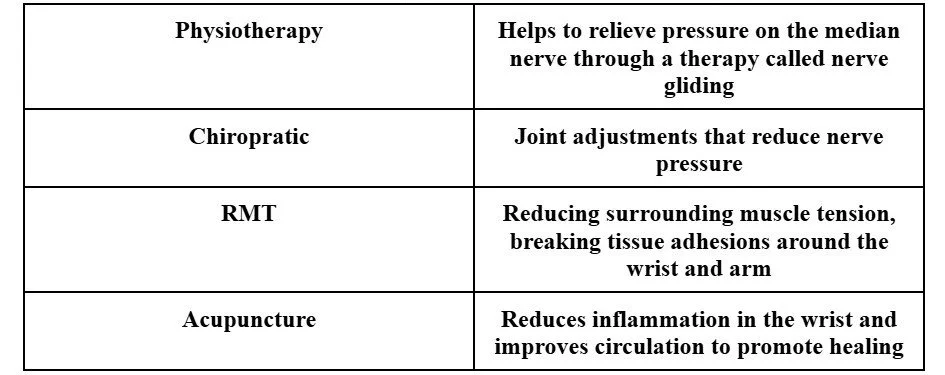
There are non-surgical and surgical care options for this condition. Non-surgical care includes wearing splints at night or resting your hands during the day. The surgical option involves a minor procedure where the carpal tunnel is cut, which releases the tension of the ligaments pressing on the nerve.
Look at all the ways our team can help you! Book online today!
FAQ’s
-
The most common early signs are numbness or tingling in the thumb, index, middle, and half of the ring finger.
Nighttime Symptoms: Many people first notice these symptoms waking them up at night, often because the wrists naturally flex while sleeping.
Clumsiness: You might find yourself dropping objects, having trouble buttoning a shirt, or feeling a sense of weakness in your grip.
Relief: Shaking out your hand or flicking your wrist often provides temporary relief in the early stages.
-
Carpal tunnel syndrome occurs when the median nerve which runs from your forearm into the palm of your hand becomes squeezed or compressed at the wrist. The carpal tunnel is a narrow passageway of bones and ligaments.
Common contributing factors include:
Repetitive Wrist Motion
Anatomy & Alignment:
Underlying Health Conditions.
-
Yes, absolutely. Non-surgical treatments are often very effective, especially when started early. Common conservative options include:
Night Splinting
Activity Modification
Targeted Exercises
Inflammation Management: