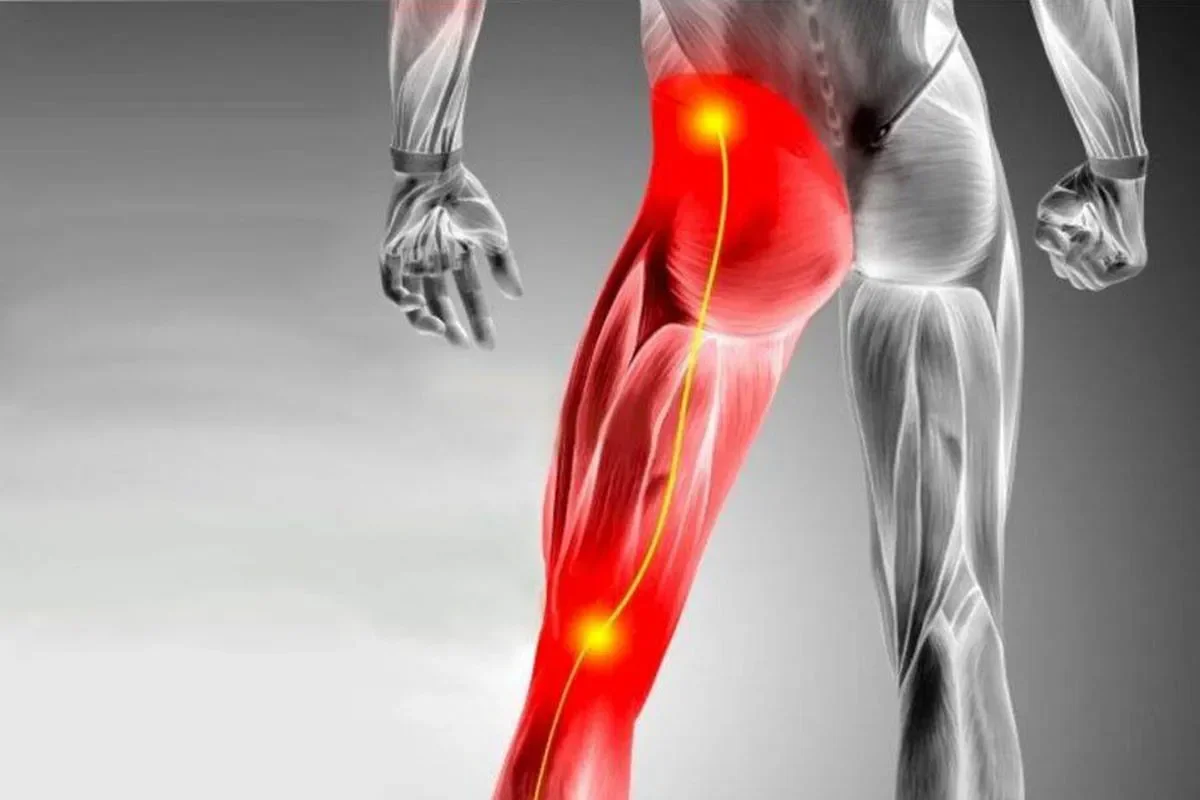
Sciatica is pain caused by compression, irritation or inflammation of the sciatic nerve. The sciatic nerve is the longest and largest nerve in the body, travelling from the lower back through the pelvis and buttocks and down the back of each leg to the feet. This nerve plays an important role in movement, strength and sensation throughout the lower body. When the sciatic nerve becomes irritated or compressed, it can cause pain and a variety of other symptoms that may travel along the entire pathway of the nerve. Many people describe sciatic pain as sharp, burning, shooting or similar to an electric shock. Sciatica is a very common condition that affects many adults at some point in their lives and can range from mild discomfort to severe pain that interferes with daily activities.
There are two different types of sciatica (both use the general term sciatica)
True sciatica: Direct injury to the sciatic nerve or irritation that directly affects the nerve. This can occur due to conditions affecting the nerve anywhere along its pathway.
Sciatica -like conditions: Conditions that cause symptoms similar to sciatica but are not directly caused by irritation of the sciatic nerve. Instead, symptoms may result from irritation or compression of nearby nerves or nerve groups that produce similar pain patterns.
Symptoms of Sciatica
Symptoms can vary depending on the severity and cause of the condition and may affect one or both sides of the body. Common symptoms include:
Pain described as a burning, sharp, shooting, or electric shock sensation
Pain that radiates from the lower back into the buttocks, leg, or foot
Numbness in the glutes, thigh, calf, foot, or toes
Tingling or “pins and needles” sensations
Muscle weakness in the affected leg
Difficulty walking, standing, or sitting for extended periods
Increased pain when coughing, sneezing, bending, or twisting
Risk Factors and Causes of Sciatica
Several factors can increase the likelihood of developing sciatica or sciatica-like symptoms. These include:
Previous or current injuries to the lower back, pelvis, or spine
Age-related changes and general wear and tear on the body
Higher body weight, which can place additional stress on the spine
Frequent bending, twisting, or heavy lifting
Sitting for prolonged periods, especially with poor posture
Improper lifting mechanics or repetitive movements at work or during sport
Physical inactivity and reduced core strength
Diabetes, which can increase the risk of nerve damage
Pregnancy due to changes in posture and increased pressure on surrounding structures
Cauda equina syndrome
Degenerative disc disease
Herniated or bulging discs
Osteoarthritis of the spine
Spinal stenosis (narrowing of the spinal canal)
Piriformis syndrome
Bone spurs that place pressure on nearby nerves
Early recognition and treatment of sciatica can help reduce pain, improve mobility, and prevent symptoms from becoming chronic. Treatment may include activity modification, physiotherapy, exercise, stretching, pain management strategies, and addressing the underlying cause of nerve irritation.
Treatment of Sciatica
Treatment for sciatica focuses on reducing pain and inflammation, improving mobility, and addressing the underlying cause of nerve compression or irritation. Most cases improve with conservative treatment and do not require surgery.
Common treatment options include:
Rest and activity modification during periods of severe pain
Physiotherapy to improve flexibility, strength, posture, and movement patterns
Stretching exercises for the lower back, hips, glutes, and hamstrings
Strengthening exercises for the core and lower body to support the spine
Heat or ice therapy to help manage pain and inflammation
Massage therapy to reduce muscle tension surrounding the affected area
Chiropractic care when appropriate to improve joint mobility and function
Acupuncture to help reduce pain and improve overall comfort
Corticosteroid injections in cases of severe inflammation
Surgery in rare cases when symptoms are severe, do not improve with conservative treatment, or involve significant nerve compression
It is important to remain as active as tolerated, as prolonged bed rest may worsen symptoms and delay recovery. Working with a healthcare professional can help identify the cause of sciatica and create an individualized treatment plan.
Want more information on Sciatica? Visit Cleveland Clinic
Visit our clinic! Book online now to see one of our expert team members who can help you!

You don’t have to live your life in constant pain. Read below to see how each member of our team could help your recovery.
Physiotherapy: Works to rebuild muscle strength so the pain stops coming back
May include: Strengthening stretches, mobility exercises and manual therapy
Chiropractic: Fixes any imbalances in your muscles that pull on your injury
May include: Joint manipulation and soft tissue techniques
Massage Therapy: Melts away tight muscles and improves circulation
May include: Deep tissue massage, myofascial release and trigger point therapy
Acupuncture: Calms down nerve pain and boosts healing circulation