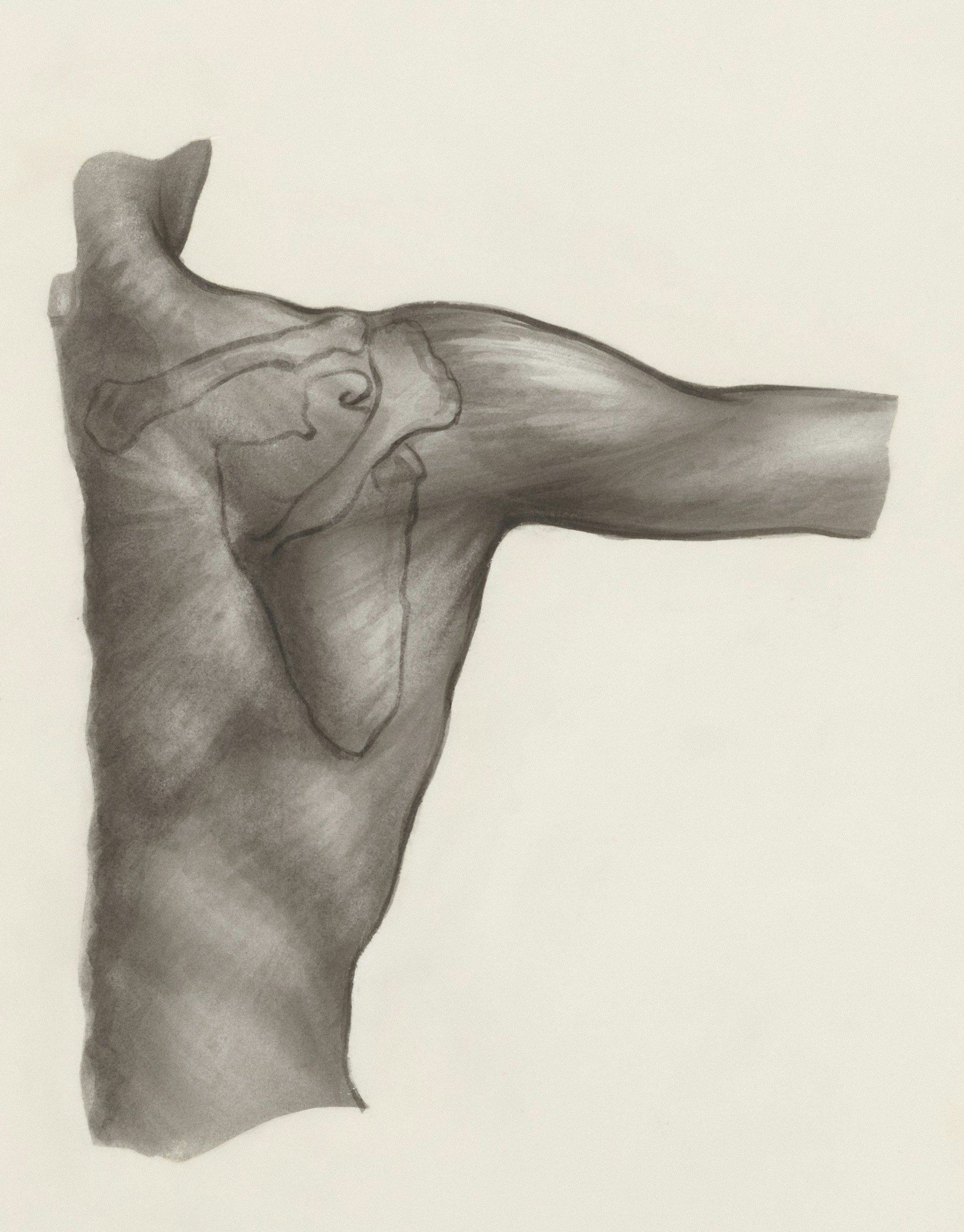
The rotator cuff is a group of four muscles and their tendons that work together to stabilize the shoulder joint and help move the arm. These muscles keep the head of the upper arm bone (humerus) centred within the shoulder socket while allowing you to perform everyday movements such as reaching, lifting, throwing, pushing, and pulling.
The four rotator cuff muscles are:
Supraspinatus – helps lift the arm away from the body
Infraspinatus – helps rotate the arm outward
Teres Minor – assists with outward rotation of the shoulder
Subscapularis – helps rotate the arm inward
Because the shoulder is the most mobile joint in the body, the rotator cuff plays a crucial role in maintaining shoulder stability. Repetitive overhead movements, poor posture, muscle weakness, and age-related wear and tear can all place stress on these tendons and lead to injury.
Rotator Cuff Tendinitis (Tendinopathy)
Rotator cuff tendinitis, also known as rotator cuff tendinopathy, occurs when one or more of the rotator cuff tendons become irritated, inflamed, or begin to degenerate due to repetitive stress. This condition is one of the most common causes of shoulder pain.
It often develops gradually over time rather than from a single injury. Athletes who perform repeated overhead motions, such as swimmers, tennis players, volleyball players, and baseball players, may be at a higher risk. It is also common among individuals whose jobs involve repetitive lifting, reaching, painting, or overhead work.
Symptoms of Rotator Cuff Tendinitis
Common symptoms include:
Pain on the outside or front of the shoulder
Pain when reaching overhead
Pain when lifting objects
Shoulder stiffness
Weakness during arm movements
Pain that worsens after activity
Difficulty reaching behind the back
Discomfort when getting dressed or brushing hair
Night pain, especially when lying on the affected shoulder
Clicking or catching sensations during movement
Common Causes and Risk Factors
Repetitive overhead activities
Poor posture, especially rounded shoulders
Muscle weakness or shoulder instability
Repetitive lifting at work
Sports involving throwing or overhead movements
Age-related tendon degeneration
Previous shoulder injuries
Reduced shoulder mobility
Without proper treatment, tendon irritation may progress and increase the risk of developing a rotator cuff tear.
What is a Rotator Cuff Tear?
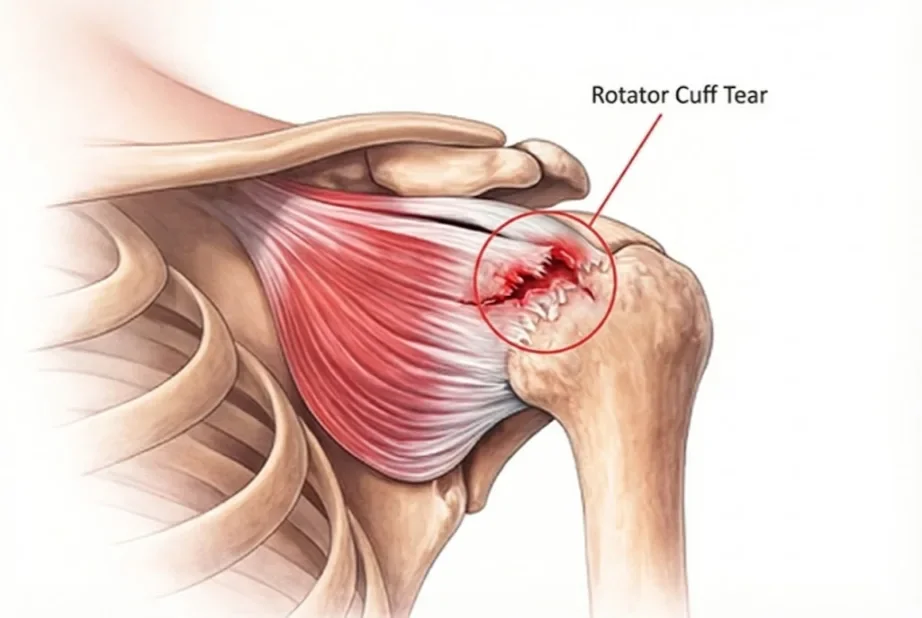
A rotator cuff tear occurs when one or more of the rotator cuff tendons partially or completely detach from the bone. Tears can develop suddenly after a fall, lifting injury, or traumatic event, but many occur gradually due to years of tendon degeneration.
Rotator cuff tears become more common with age, particularly after age 40, as the tendons naturally lose some of their strength and elasticity.
There are two main types of tears:
Partial Thickness Tear
A partial tear affects only part of the tendon, meaning the tendon remains attached but is damaged.
Full Thickness Tear
A full-thickness tear occurs when the tendon completely tears through and may partially or completely detach from the bone.
Symptoms of a Rotator Cuff Tear
Symptoms may include:
A deep ache in the shoulder
Pain when lifting the arm overhead
Weakness when rotating or lifting the arm
Difficulty reaching behind the back
Pain that worsens at night or when lying on the injured side
Clicking, popping, or grinding sensations in the shoulder
Reduced range of motion
Difficulty performing daily activities such as carrying groceries or reaching into cupboards
Loss of strength during sports or exercise
In more severe tears, people may find it difficult to raise their arm at all.
Treatment Options
Many rotator cuff injuries can be successfully treated without surgery, especially when identified early.
Common treatment options include:
Activity modification to reduce irritation
Physiotherapy exercises to improve strength and mobility
Postural correction and movement retraining
Ice or heat therapy for pain management
Manual therapy techniques
Acupuncture
Massage therapy to reduce muscle tension
Progressive strengthening programs
Corticosteroid injections when appropriate
Surgical intervention for significant or persistent tears
How can I prevent this?
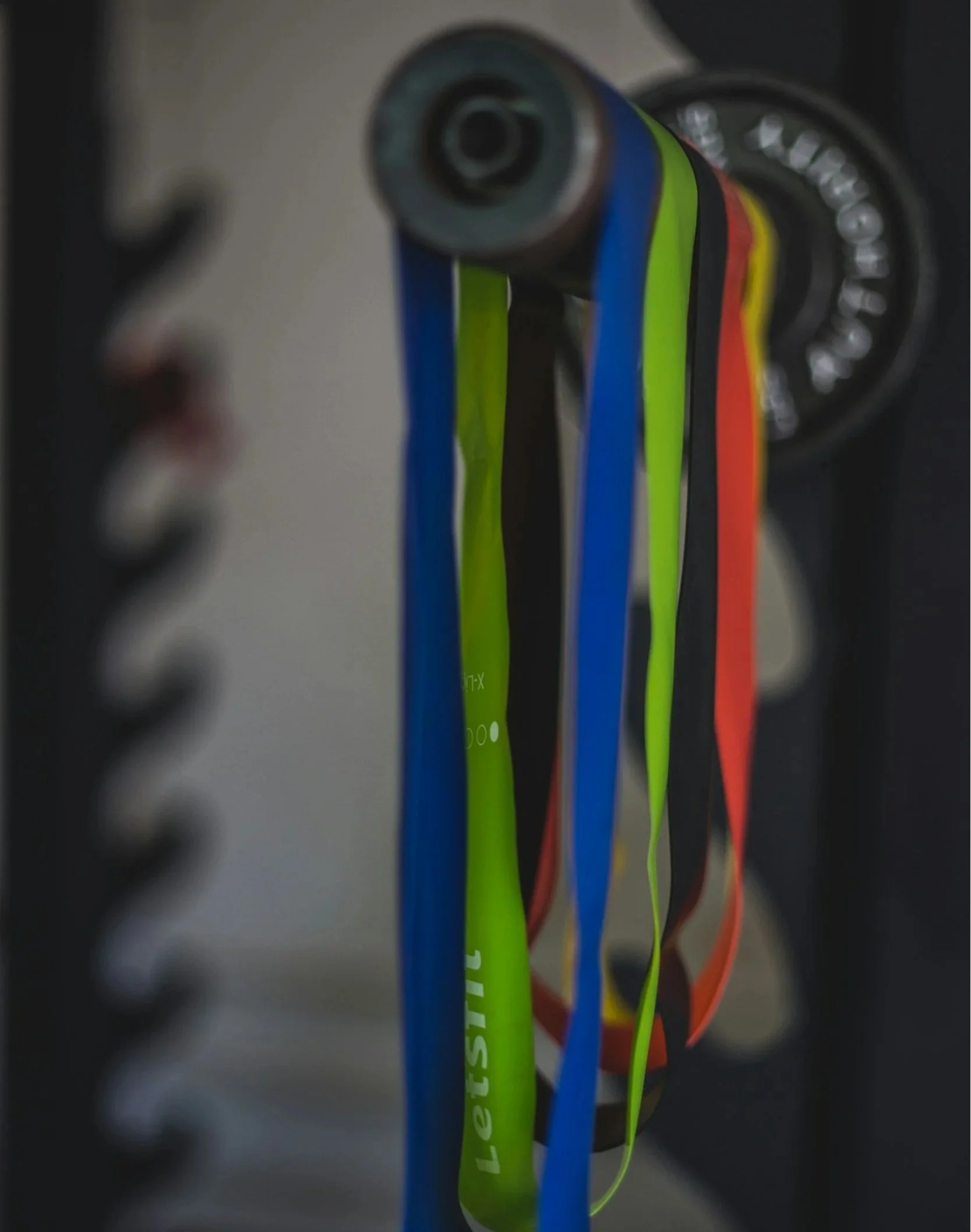
Strengthening and stabilizing the rotator cuff and shoulder is the best way to keep these muscles from weakening over time. Light resistance bands and controlled movement are the best, easiest way to improve shoulder strength.
If you're experiencing shoulder pain, weakness, or difficulty with everyday activities, our multidisciplinary team can help identify the cause and create a treatment plan tailored to your needs.
Our Physiotherapists, Chiropractors, Massage Therapists, and Acupuncturists work together to reduce pain, improve mobility, restore strength, and help prevent future injuries. Whether you're dealing with rotator cuff tendinitis, a partial tear, or ongoing shoulder discomfort, we'll help you return to the activities you enjoy with confidence.
Call us or book an appointment online now! We can help you get back to your daily activities.
Physiotherapy: Works to rebuild muscle strength so the pain stops coming back
May include: Strengthening, stretches, mobility exercises and manual therapy
Chiropractic: Fixes any imbalances in your muscles that pull on your injury
May include: Joint manipulation and soft tissue techniques
Massage Therapy: Melts away tight muscles and improves circulation
May include: Deep tissue massage, myofascial release and trigger point therapy
Acupuncture: Calms down nerve pain and boosts healing circulation