Anatomy of a Vertebra
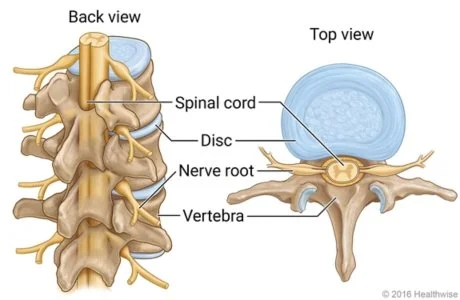
Our spinal vertebrae have a small, fluid-filled (jelly-like consistency) disk that acts as a cushion between the vertebrae and separates them from sitting on top of each other. Over time, this disk dries out and flattens, which makes it easier to tear or burst.
Herniated Disk
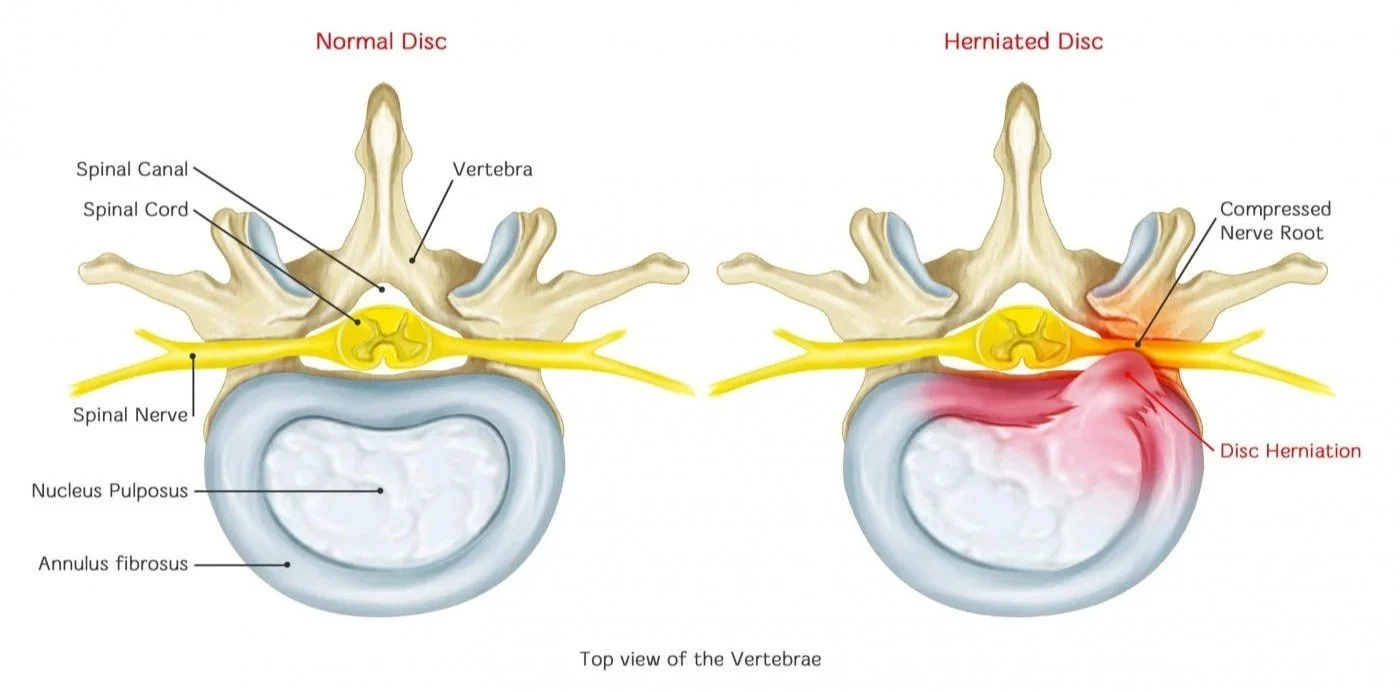
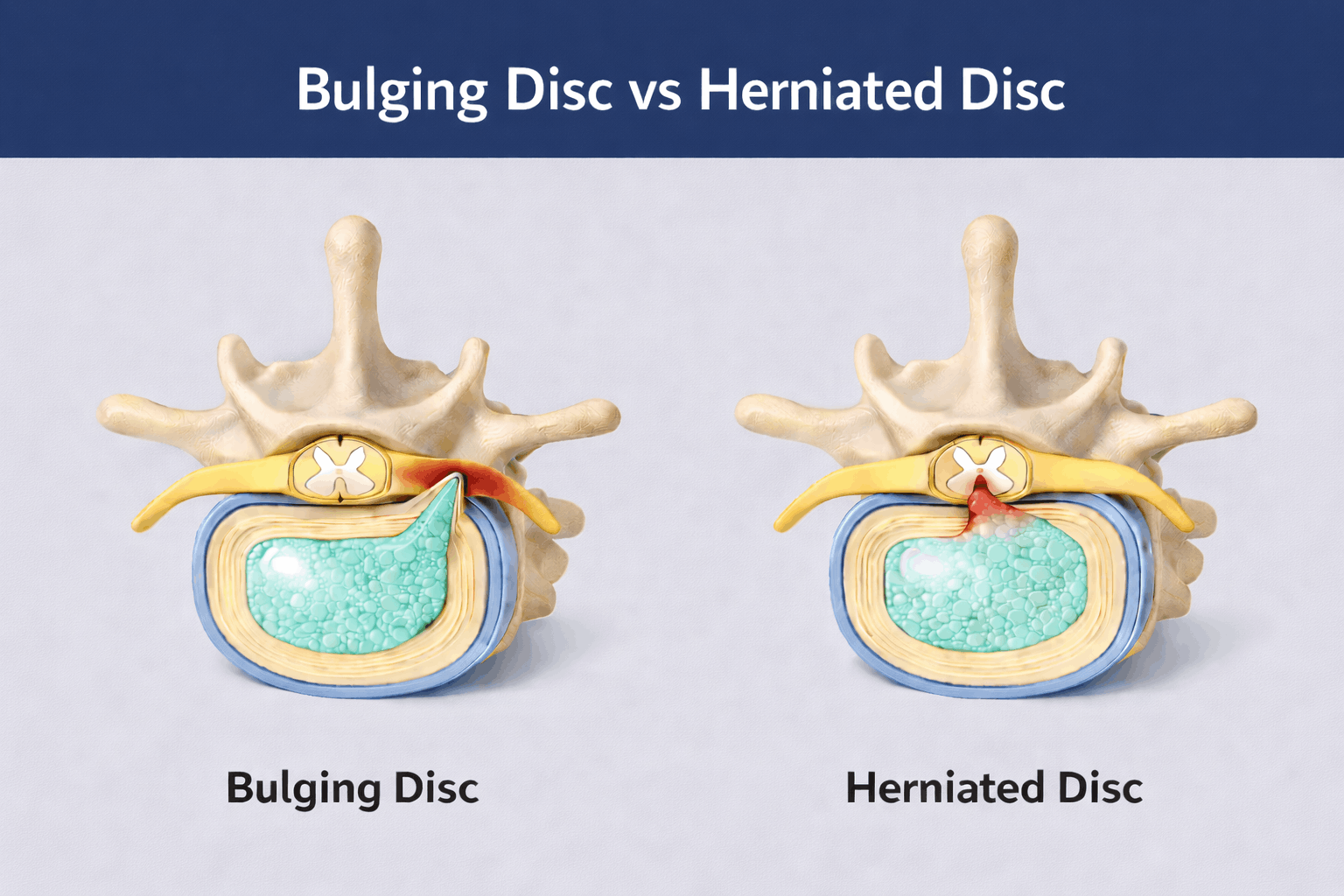
A herniated disk occurs when the inner jelly center pushes through the outer layer of the disk, causing it to put pressure on the nerves that run through the spinal cord. The outer ring of this cushioned area develops a crack or tear that allows the jelly core to leak out.
Symptoms include:
Low back pain: often in conjunction with sciatica
Numbness or tingling
Muscle weakness
Causes and risk factors:
Wear and tear caused by age
Improper lifting
Overweight
Smoking
Prolonged sitting
Bulging Disc
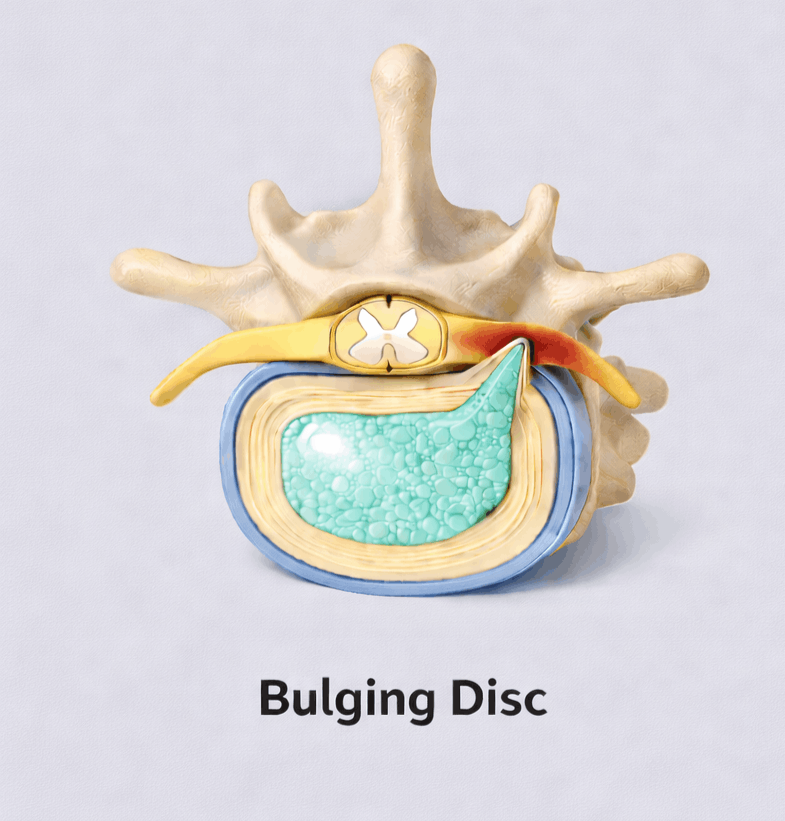
A bulging disc occurs when the inner jelly center pushes outward and creates an outpouching that presses on nearby spinal nerves. With a bulging disc, the outer ring remains intact while the bulging affects a wider area of the disc.
Symptoms include:
Low back pain
Neck stiffness
Shoulder pain
Tingling or burning down the arm and fingers
Numbness
Common causes of a bulging disc:
Aging and disc degeneration
Repetitive physical strain: heavy lifting, twisting or bending
Overweight
Smoking
How can we help?
At our clinic, our multidisciplinary team will help strengthen the core, lower back, hip and pelvis to help take the load off the injured disc. Book an appointment with a Physiotherapist or Chiropractor to help ease muscle pain and start strengthening the muscles in your back!