Kyphosis is a spinal condition where the upper back curves forward more than normal, creating a rounded or hunched back. This blog post will go through some of the most well-known forms of Kyphosis.
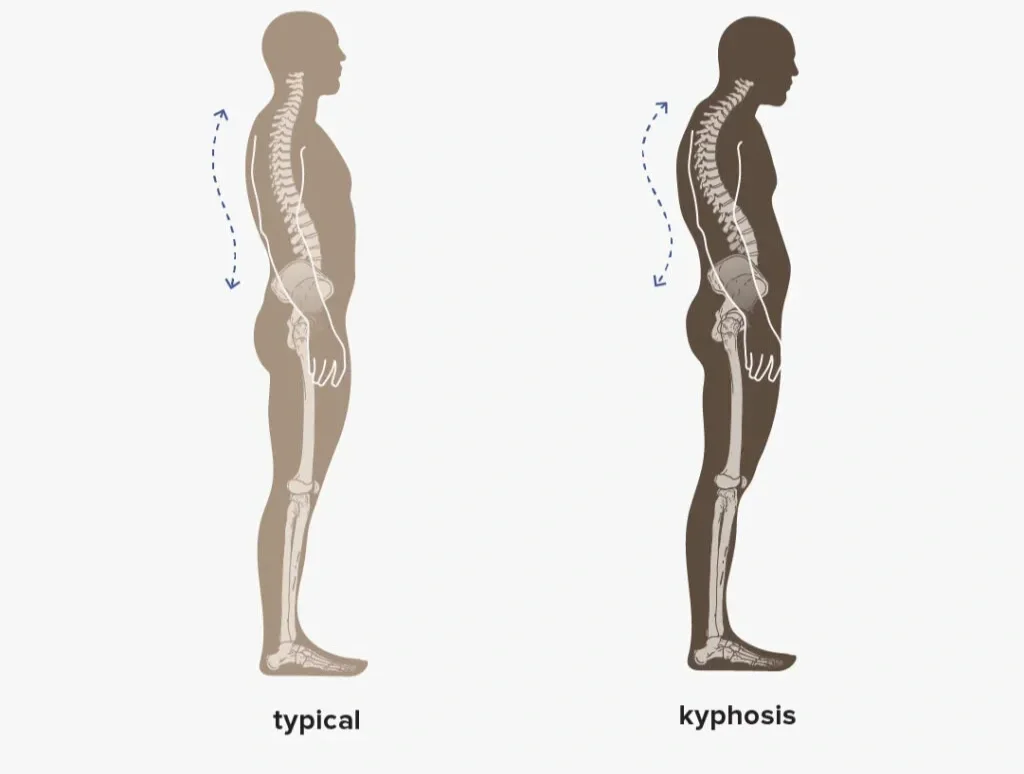
Postural Kyphosis
Postural Kyphosis is the most common type of kyphosis. Usually appearing in teens due to slouching or weak back muscles. This condition can typically be improved with better posture and exercises.
Common Risk factors:
Prolonged slouching or poor posture over time
Muscle imbalances such as weak back extensor and core muscles combined with tight hamstring muscles.
The most common symptom is having upper back fatigue or stiffness, and it is important to note that this condition is not known for being painful.
Scheuermann’s Kyphosis
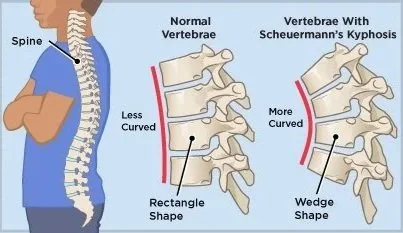
Find more information about this condition: https://kidshealth.org/en/parents/scheuermann-kyphosis.html
This is a structural condition in which the vertebrae grow into a wedge shape instead of a rectangular block during adolescence. Normal vertebrae are rectangular in shape, but in Scheuermann’s Kyphosis, three or more vertebrae grow slower than others, turning into a wedge.
Curvature ranges from 45 to 75 degrees, and an X-ray will show anterior wedging across three consecutive vertebrae. The causes of this condition aren’t fully known, but it is assumed to be heavily influenced by genetics. The common age of diagnosis for this condition is 10-17 years during development. Bracing can help halt progression of the curve while the skeleton is maturing.
Congenital Kyphosis
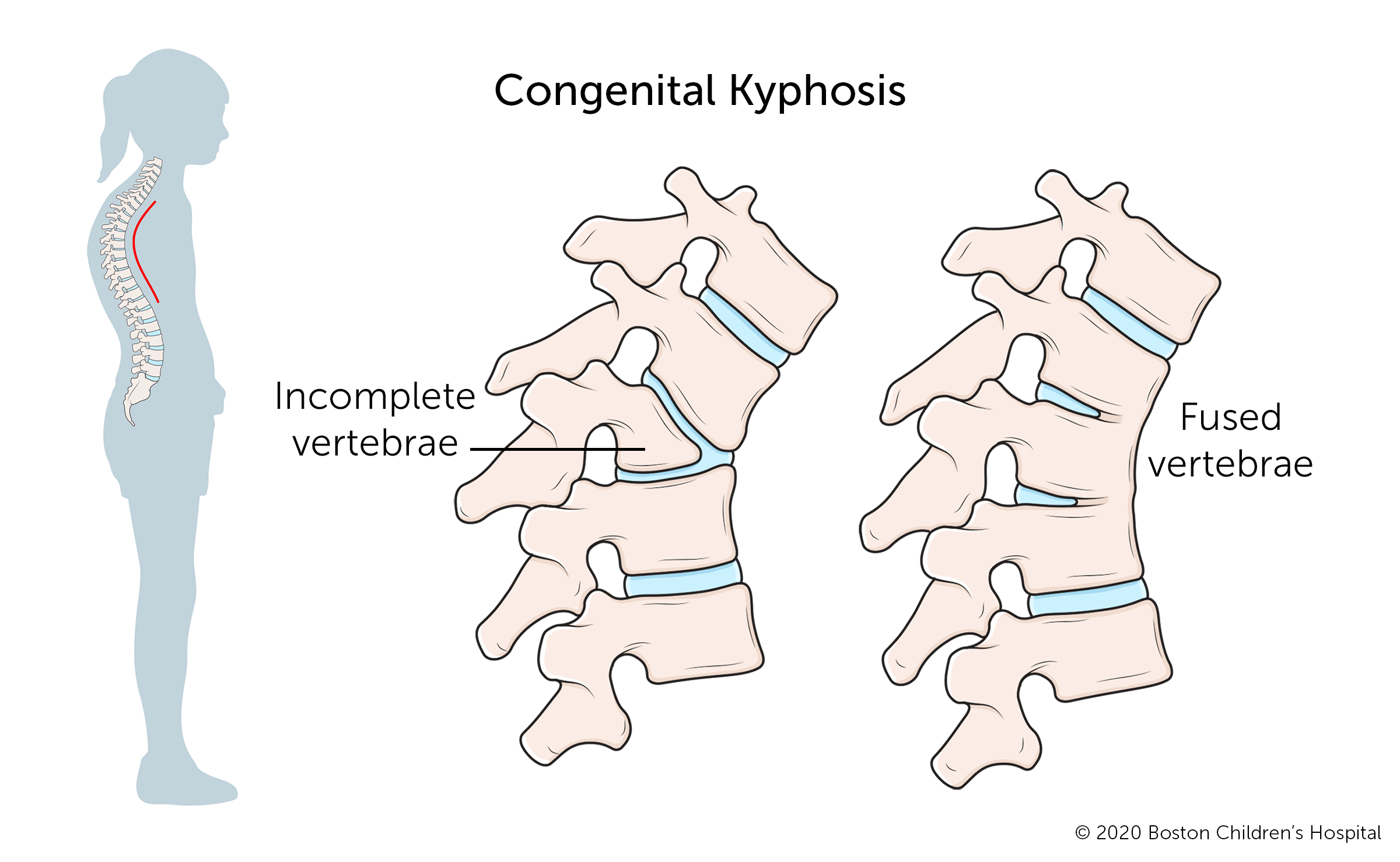
Learn more about Kyphosis in children here: https://www.childrenshospital.org/conditions-treatments/kyphosis
This is a rare form of kyphosis that presents at birth. This is caused by spinal bones that fail to form properly in the womb. There are three different types of this condition:
Type 1 Failure of Formation: Part of the vertebral body fails to form properly, causing a sharp forward curve that usually rapidly worsens with growth.
Type 2 Failure of Segmentation: Two or more vertebrae fail to separate normally during development. Progression is slow and often becomes more noticeable later in life.
Type 3 Mixed: There are some cases where infants will have a mix of the two types.
Common Symptoms include:
Leg pain
Numbness and weakness
Difficulty walking
Changes in bowel or bladder control
Age-Related Kyphosis
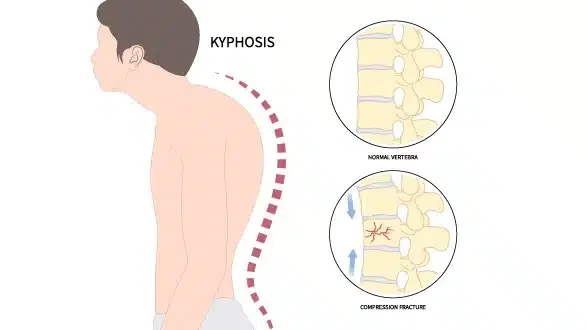
Age-related kyphosis is caused by weakened spinal bones that experience small compression fractures and disc degeneration over time. This is most commonly seen in older adults and typically can not be reversed.
Common symptoms include:
Rounded shoulders or a visible hump in the upper back
Back pain
Muscle stiffness
Fatigue in the mid to lower back
Tight hamstring muscles
In severe cases, difficulty breathing or nerve compression
How can Total Rehabilitation help you?
At our clinic, our multidisciplinary team works together to help individuals manage spinal-related injuries and pain and restore function. Through a combination of physiotherapy, chiropractic care, and massage therapy we can help you manage these symptoms and help you get back to daily activities!
Whether you are experiencing new symptoms or dealing with ongoing back pain, our team can create an individualized treatment plan to help you move more comfortably and return to the activities you enjoy. Book an appointment with a Physiotherapist, Chiropractor or Massage Therapist to begin your recovery and build a stronger, more resilient spine.